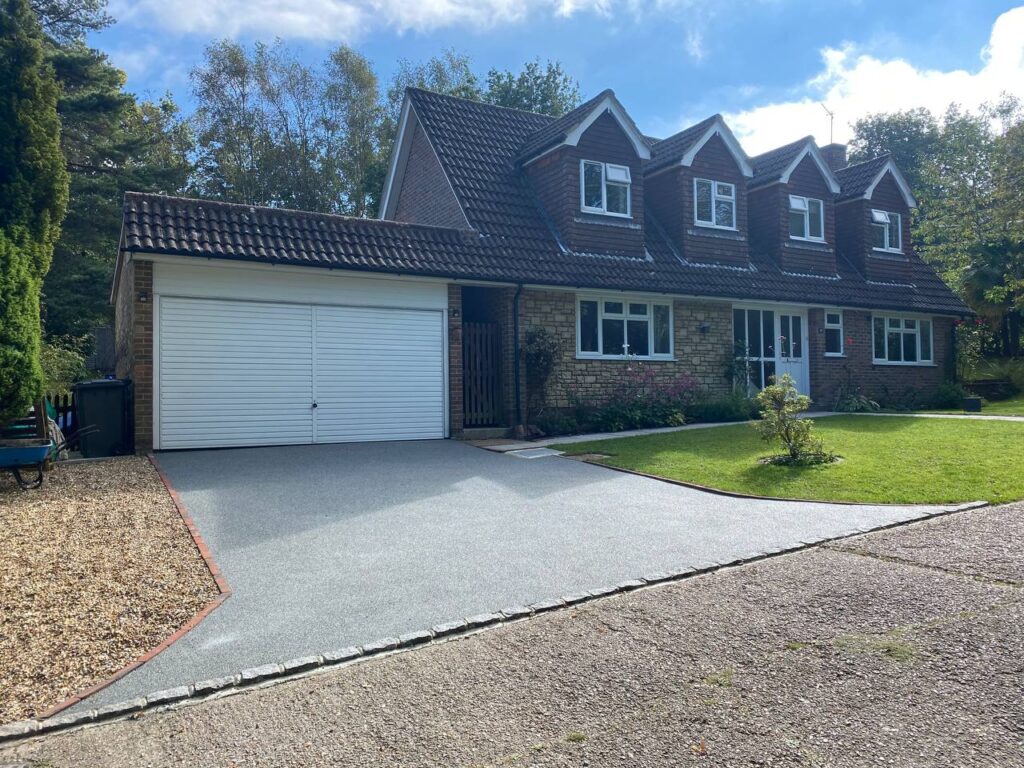
An underused part of a garden can represent valuable outdoor space that is simply not functioning effectively. Uneven ground, worn surfaces, awkward transitions or an area that becomes difficult to use after wet weather can all discourage homeowners from making full use of the space. Creating a properly designed patio can turn such an area into a more practical extension of the garden.
For properties in Leeds, West Yorkshire, resin bound surfacing can be an effective option for creating a clean, continuous patio. The finished surface can provide a defined area for seating, outdoor furniture and everyday garden use while helping previously disconnected parts of the garden feel more purposeful.
However, the quality of a resin bound patio depends on much more than the visible resin and aggregate. The existing ground, supporting base, levels, drainage, edging and relationship with surrounding garden features all need careful consideration. When these elements are planned properly, an underused area can become a much more functional part of the property.
How Can a Resin Bound Patio Make Better Use of Your Garden?
A resin bound patio can transform an underused garden area by creating a firm, clearly defined and visually consistent surface where there was previously little practical reason to spend time.
The improvement is not simply cosmetic. A well-designed patio can establish a usable destination within the garden, connect different areas more effectively and provide a stable surface for furniture and regular foot traffic.
The most successful transformation begins by understanding why the existing area is underused and designing the new patio around how homeowners actually want to use the space.
Start by Understanding Why the Area Is Underused
Before choosing any new surface, it is useful to identify what currently prevents the space from working effectively.
The ground may be uneven, muddy or poorly defined. An old surface may have deteriorated, or there may simply be no obvious purpose for that section of the garden.
Identifying the existing problem helps determine whether a resin bound patio will provide a genuine practical improvement rather than simply changing the appearance.
A Patio Can Give an Empty Area a Clear Purpose
Some parts of a garden remain unused because they have never been properly defined.
A new patio creates an obvious functional area.
It can establish space for seating, a table, outdoor furniture or simply a firmer place from which to enjoy the garden.
Creating a defined surface often makes the surrounding layout easier to understand because different areas begin to have clearer roles.
Resin Bound Surfacing Creates a Continuous Finish
A resin bound surface is formed by mixing aggregate with resin before the material is applied to a suitably prepared base.
The result is a continuous finish rather than a surface formed from individually laid paving units.
This can give a patio a clean, cohesive appearance.
For awkward or irregular garden areas, the continuous nature of the finish can also make it easier to create a surface that follows the intended layout.
A Consistent Surface Can Improve Everyday Usability
Uneven garden areas can make positioning furniture difficult.
Tables and chairs may rock, while repeated changes in level can make the space less comfortable to move around.
A correctly installed resin bound patio creates a more consistent surface.
This can make the area considerably more practical for normal garden use and provide a stable foundation for suitable outdoor furniture.
Resin Bound Patios Can Work With Different Garden Shapes
Not every garden contains a convenient rectangular area for a patio.
Some spaces include curved boundaries, narrow sections or irregular corners.
Resin bound surfacing can be planned around different shapes because the finished surface does not depend on repeating individual paving units.
This flexibility can help make use of areas that might otherwise remain disconnected from the main garden.
Awkward Corners Can Become More Useful
An awkward corner may have enough space to be useful but lack a suitable surface.
Without a defined purpose, it can gradually become an area that homeowners rarely use.
Creating a resin bound patio can turn the space into a deliberate part of the garden.
The layout should still be designed carefully so that the patio dimensions work with the intended furniture and access.
A New Patio Can Connect Different Parts of the Garden
A patio does not need to function as an isolated feature.
It can form part of a wider layout that connects the property with lawns, paths and other garden areas.
A carefully positioned resin bound surface can improve movement between these spaces.
This can make the garden feel more coherent and reduce the number of areas that seem disconnected or difficult to reach.
Resin Bound Paths Can Complement the Patio
Where appropriate, a resin bound patio can be connected with a path using the same type of finish.
This can create continuity between different parts of the garden.
The path can guide movement towards the patio rather than leaving the new seating area isolated.
Levels, widths and transitions should be planned together so that the complete layout functions as one design.
Good Patio Design Starts With How the Space Will Be Used
A patio should not simply occupy whatever space happens to be available.
The intended use should influence its size and shape.
A small seating area may require a different layout from a patio intended to accommodate a larger table and regular movement around furniture.
Planning these requirements before installation helps avoid creating a finished surface that looks attractive but feels cramped or impractical.
Furniture Space Should Be Considered During Planning
It is useful to think beyond the dimensions of the furniture itself.
Chairs often need space behind them, and people need sufficient room to move around tables and seating.
Where a patio is designed too tightly around the furniture, everyday use can become awkward.
Considering these movements during the planning stage can produce a much more comfortable outdoor area.
Access to the Patio Should Feel Natural
A new patio can be beautifully surfaced but still remain underused if reaching it feels inconvenient.
The relationship between the patio and existing access routes therefore matters.
Paths, steps and surrounding surfaces should be considered as part of the design.
A natural route into the patio encourages the area to become part of everyday garden use.
Existing Levels Need Careful Assessment
An underused garden area may contain slopes, dips or irregular levels.
These conditions should be assessed before resin bound surfacing is installed.
Simply covering uneven ground will not automatically create an appropriate finished patio.
The underlying area needs to be prepared so that suitable levels can be established and the finished surface performs as intended.
Ground Preparation Is Fundamental
The appearance of the completed patio can make it easy to focus entirely on the resin bound layer.
However, what lies underneath is equally important.
Weak, unstable or unsuitable ground can affect the surface above.
Professional installation should therefore consider excavation, preparation and the supporting construction required for the particular site.
The Base Supports the Resin Bound Surface
Resin bound material is a finishing surface rather than a replacement for proper foundations.
It needs to be installed onto an appropriate stable base.
If the construction underneath moves, cracks or settles significantly, that movement can affect the finished resin bound layer.
This is why the existing area should be properly assessed before deciding how the patio should be constructed.
An Existing Surface May Sometimes Be Suitable
Not every patio project requires exactly the same groundwork.
An existing base may potentially form part of the new construction if it is suitable, stable and compatible with the intended system.
However, its condition should be assessed rather than assumed.
Cracking, movement, unsuitable levels or deterioration may need attention before the resin bound surface is installed.
Existing Cracks Should Be Investigated
If the proposed patio area already contains a cracked hard surface, simply covering those cracks does not necessarily remove the reason they developed.
Movement beneath the existing surface may continue.
The cause and extent of cracking should therefore be considered before installation.
Good preparation aims to prevent existing weaknesses from simply becoming reflected through the new surface.
Sunken Areas Need Attention
Depressions in an existing surface can indicate settlement or inconsistent support.
They may also collect water.
These areas should be addressed as part of preparation rather than hidden beneath the finished patio.
Creating suitable levels and a stable supporting construction provides a much better foundation for the resin bound finish.
Drainage Should Be Considered From the Beginning
Any outdoor patio needs an appropriate approach to water management.
Rainfall should not be treated as something to consider only after the patio has been installed.
Existing ground levels, surrounding surfaces and the route water will take should be assessed during planning.
This allows drainage and surface design to work together.
Resin Bound Surfacing Can Be Permeable When Correctly Constructed
One characteristic commonly associated with resin bound surfacing is permeability.
However, this depends on the complete construction rather than the visible resin bound layer alone.
For water to pass effectively through the system, the supporting layers beneath also need to be compatible with that arrangement.
A resin bound surface installed over an impermeable base should not automatically be described as a completely permeable construction.
Surface Falls Can Still Matter
Even where permeability forms part of the design, appropriate levels remain important.
The patio needs to relate correctly to surrounding garden surfaces and adjoining features.
Poorly planned levels can create awkward transitions or encourage water to collect in unwanted areas.
Professional preparation considers the complete site rather than focusing solely on the final surface.
Persistent Water Problems Should Be Addressed Before Installation
If the existing garden area regularly becomes waterlogged or experiences persistent standing water, the reason should be investigated.
Installing a new patio without considering the existing water behaviour may leave the underlying problem unresolved.
The surrounding ground, levels and drainage arrangements may all need to be taken into account before the new surface is constructed.
Edging Helps Define the Patio
A clear edge can give a resin bound patio a deliberate shape and separate it from surrounding garden areas.
Edging can also form an important part of the overall construction.
The exact approach should be planned according to the layout and adjoining surfaces.
Consistent boundaries contribute significantly to the finished appearance.
Curved Edges Can Create a Softer Layout
A resin bound patio does not necessarily need straight edges.
Where the garden design suits it, curved boundaries can be incorporated.
This can help the patio follow planting areas or create a less rigid transition into the surrounding garden.
The shape should still be practical and carefully set out before installation begins.
Straight Lines Can Create Strong Definition
In other gardens, straight edges may suit the surrounding layout more effectively.
They can create a clear distinction between the patio and lawn or planting.
The choice between straight and curved boundaries should respond to the property and intended design rather than following a single standard approach.
Transitions to Lawns Need Careful Planning
Where the patio meets a lawn, the transition should be deliberate.
Poorly defined edges can make an otherwise neat surface appear unfinished.
Levels also need consideration so that the two areas relate appropriately.
Planning the boundary before surfacing helps create a cleaner relationship between hard and soft landscaping.
Existing Garden Features Can Often Be Incorporated
Transforming an underused area does not necessarily mean removing everything that already exists.
Suitable planting, borders or other established features may be incorporated into the new layout.
The resin bound patio can be designed around features worth retaining.
This can help the completed area feel integrated with the existing garden rather than appearing like an unrelated addition.
A Patio Can Make the Garden Feel More Organised
A garden can feel underused when there is little distinction between circulation areas, planting and places to sit.
Introducing a clearly defined patio can provide structure.
The surrounding spaces can then relate to this new focal area.
The result can be a garden that feels more deliberate without requiring every existing feature to be changed.
Resin Bound Surfacing Can Refresh a Tired Outdoor Area
An older patio or hardstanding can become visually inconsistent through repeated repairs, staining or deterioration.
Where the underlying construction is suitable or can be appropriately prepared, resin bound surfacing can create a much more uniform finish.
The improvement can be particularly noticeable where the existing area contains several different materials or patch repairs.
The Existing Surface Should Not Simply Be Hidden
A worn patio may look like an obvious candidate for resurfacing, but appearance alone should not determine the preparation.
If the existing surface is moving, badly cracked or unstable, those issues need attention first.
Covering significant defects without addressing their cause risks transferring problems into the new finish.
Assessment helps determine whether resurfacing or more substantial preparation is appropriate.
Resin Bound Patios Can Create a Clean Visual Transition
A well-planned patio can provide a clear transition between the property and the garden.
Instead of stepping directly onto an irregular or unused area, homeowners can have a defined hard surface before moving into softer landscaping.
This can improve both appearance and everyday practicality.
The patio becomes a functional link rather than simply another surface.
The Surface Works Well for Regular Foot Traffic
Patios are frequently crossed even when nobody is sitting outside.
They can become part of the normal route through the garden.
A properly constructed resin bound surface provides a firm area for everyday pedestrian movement.
This can be especially useful where the previous surface became muddy or uneven during wetter conditions.
A Continuous Finish Avoids Loose Surface Material
Loose aggregate can move beneath foot traffic and around furniture.
A resin bound system holds aggregate together within the resin, creating a bound finish.
This makes it different from surfaces where loose stone remains free to move.
For a patio containing chairs and tables, a bound surface can provide a more consistent area for everyday use.
Resin Bound Is Different From Resin Bonded Surfacing
The terms resin bound and resin bonded are sometimes confused.
With resin bound surfacing, aggregate and resin are mixed together before application.
This creates the characteristic smooth, continuous finish associated with resin bound patios.
Understanding the intended system is important when planning the finished appearance and construction.
Colour and Aggregate Choice Can Influence the Finished Appearance
Resin bound surfaces can be created using different aggregate blends.
The selection can influence whether the patio has a lighter, darker or more understated appearance.
The choice should complement the surrounding property and garden rather than being considered in isolation.
A patio that relates well to nearby materials can feel more naturally integrated into the overall space.
The Patio Does Not Need to Dominate the Garden
A successful garden improvement does not necessarily involve creating the largest possible hard surface.
The patio should be proportionate to the available space and intended use.
Retaining appropriate areas of lawn, planting or other landscaping can create a more balanced layout.
The objective is to make an underused area functional without unnecessarily surfacing the entire garden.
Small Garden Areas Can Still Benefit
A resin bound patio does not need to cover a large area to make a meaningful difference.
A relatively modest section can provide enough space for seating or create a more useful transition from the property.
In smaller areas, accurate planning becomes especially important because every part of the available space needs to serve a purpose.
Larger Patios Need Thoughtful Layouts
Where more space is available, it can be tempting simply to create one large uninterrupted surface.
However, the layout should still respond to how the area will be used.
Furniture zones, walking routes, edges and connections to the wider garden should all be considered.
A large patio works best when its dimensions have been planned around practical use rather than surface area alone.
An Underused Side Area Can Become More Practical
Narrow or side sections of a garden can sometimes be difficult to use effectively.
Depending on their dimensions and access, a resin bound surface can help turn these spaces into clearer routes or more functional hardstanding areas.
The suitability of the area should be assessed individually.
A well-designed solution should improve usability rather than simply fill an awkward space.
Maintenance Requirements Should Be Considered
Like any outdoor surface, a resin bound patio benefits from appropriate care.
Leaves, soil and other debris can accumulate over time, particularly around planting areas.
Keeping the surface reasonably clear helps maintain its appearance.
Any developing defects should also be investigated rather than ignored, especially where they may indicate movement within the construction below.
Nearby Planting Can Affect Surface Cleanliness
Trees, shrubs and borders can contribute leaves, soil and organic material to the patio.
This is a normal part of having a landscaped garden.
The layout can make routine cleaning easier by avoiding unnecessarily difficult corners where debris repeatedly collects.
Considering maintenance during design can improve everyday practicality after installation.
Furniture Should Be Used With the Surface in Mind
Outdoor furniture places concentrated contact points on any patio surface.
Suitable furniture should be positioned and moved with reasonable care.
The patio should also be constructed on a stable base so that normal garden use does not expose weaknesses in the underlying construction.
The surface and its intended use should be considered together.
A Patio Can Improve the Relationship Between Indoor and Outdoor Space
An underused garden area immediately outside the property can create an awkward transition.
Creating a defined patio can make that space feel more purposeful.
Instead of being somewhere people simply walk across, it can become a usable outdoor area connected naturally to the rest of the garden.
This can change how frequently the space is used.
Good Design Can Encourage More of the Garden to Be Used
Improving one underused area can have a wider effect on the garden.
A new patio may create a destination that encourages homeowners to use paths, lawns and surrounding areas more frequently.
It can also clarify how different parts of the garden connect.
The transformation therefore comes from improving the overall layout as much as changing the surface itself.
The Patio Should Be Designed for Long-Term Use
A successful patio should continue to make sense after the initial installation.
Furniture arrangements may change, and the way the garden is used can evolve.
Providing practical dimensions, straightforward access and sensible connections to surrounding areas can make the surface more adaptable.
Designing solely around appearance can overlook these everyday requirements.
Professional Preparation Adds Significant Value
Much of the work that determines the quality of a resin bound patio may no longer be visible once the installation is complete.
Ground preparation, base construction, levels and drainage all sit beneath or around the finished surface.
These stages are essential.
Professional installation provides an opportunity to identify existing weaknesses and prepare the area appropriately before the resin bound material is applied.
The Base Is as Important as the Resin Finish
A visually attractive resin bound surface cannot compensate for substantial movement underneath it.
The supporting construction should provide an appropriate, stable foundation.
This is particularly important when transforming an existing area where the condition beneath the old surface may not initially be obvious.
Assessment before installation helps determine what preparation is genuinely required.
Professional Assessment Can Prevent Unnecessary Work
Not every underused garden area needs complete reconstruction.
Where an existing base is suitable, parts of it may potentially be retained depending on the proposed system.
Elsewhere, more extensive preparation may be needed.
Assessing the actual condition allows work to be proportionate rather than automatically assuming every site requires exactly the same construction.
A Complete Patio Plan Produces Better Results
Before installation, it is useful to consider:
- Why the existing area is underused
- How the new patio will be used
- Required patio dimensions
- Furniture and movement space
- Existing ground conditions
- Base suitability
- Surface levels
- Drainage
- Access routes
- Patio edges
- Connections to paths and lawns
- Existing features worth retaining
- Future maintenance
Considering these factors together helps turn a surfacing project into a practical garden improvement.
Professional Resin Bound Patios in Leeds, West Yorkshire
At Leeds Resin Driveways, we consider the complete area before installing a resin bound patio.
The existing surface or ground, supporting base, drainage, levels, edges and intended use all influence how the patio should be prepared and constructed.
For homeowners in Leeds, West Yorkshire, a professionally installed resin bound patio can provide an effective way to turn a neglected or underused garden area into a more defined, practical and attractive part of the property.
Conclusion
A resin bound patio can transform an underused garden area by giving the space a clear purpose and providing a firm, continuous surface for seating, furniture and everyday movement. It can also improve connections between different parts of the garden and help an awkward or poorly defined area become part of the wider layout.
However, the transformation depends on more than the appearance of the resin bound finish. Ground preparation, base stability, drainage, levels, edging and practical access all influence how successfully the patio functions.
The best results come from identifying why the area is currently underused and designing the new patio around how the space will actually be enjoyed. This creates an improvement that is practical as well as visually consistent.
If you are considering transforming an underused garden area in Leeds, West Yorkshire, contact Leeds Resin Driveways. We can assess the existing space and recommend an appropriate approach to creating a professionally prepared and installed resin bound patio.
Call us on: 0113 5191138
Click here to find out more about Leeds Resin Driveways
Click here to complete our contact form and see how we can help with your driveway needs.